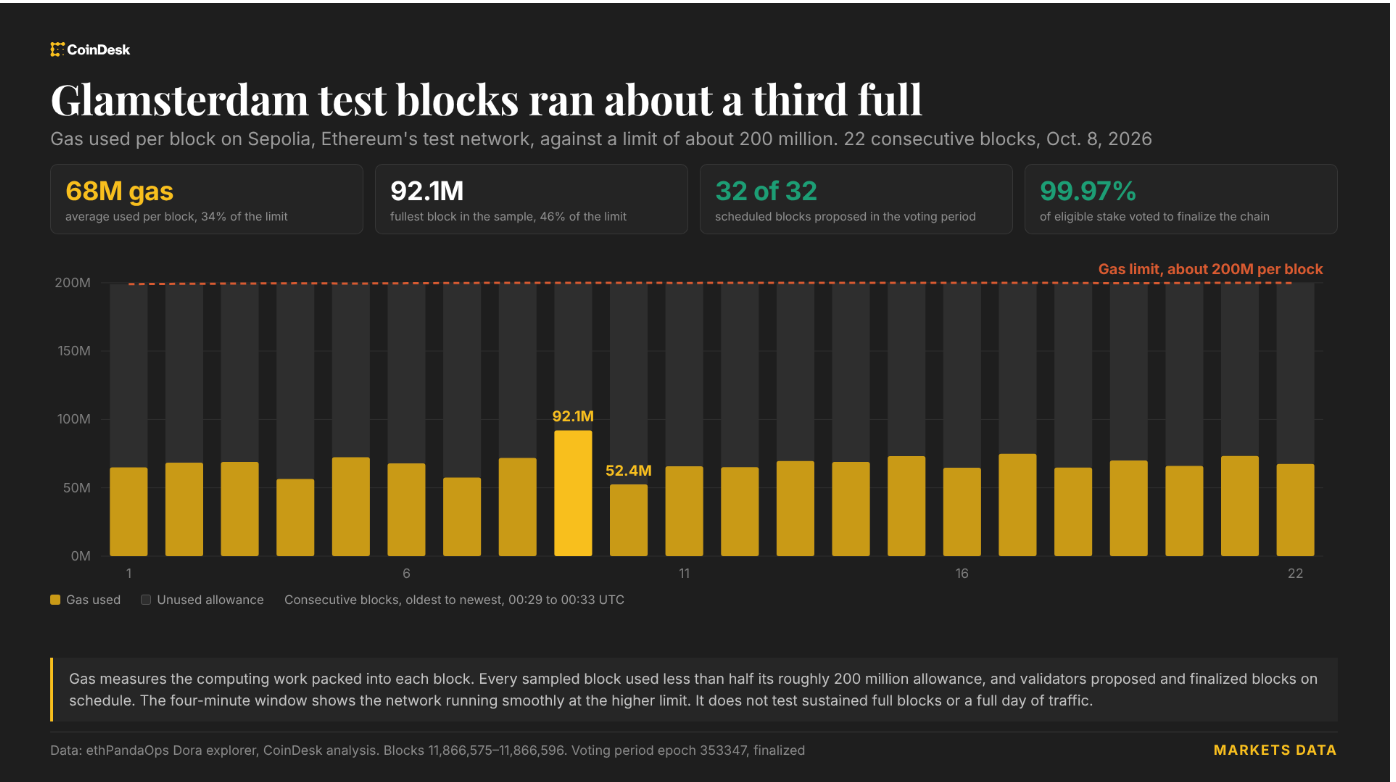

Ethereum’s Glamsterdam upgrade is running on a public test network with a processing budget more than three times its previous level, as developers test changes intended to give the blockchain room for more payments and trades.
The upgrade activated Tuesday on Sepolia, where developers try software with tokens that carry no real value before introducing it to Ethereum itself.
By early Thursday, blocks were being produced with a limit near 200 million gas, up from about 60 million before the change. Gas measures the computing work needed to process transactions.
On Ethereum’s live network, users compete for space when too many transactions arrive at once, pushing fees higher. A larger processing allowance could accommodate more activity before that competition intensifies.
Glamsterdam also changes how much gas particular tasks consume, so a threefold increase in the budget does not translate directly into three times as many…